The Data Cost Cellar: an afternoon on compute costs, with wine
An afternoon at the QT in Melbourne on what AI consumption actually costs, why the semantic layer turns into a budget conversation, and the tasting the name promised.
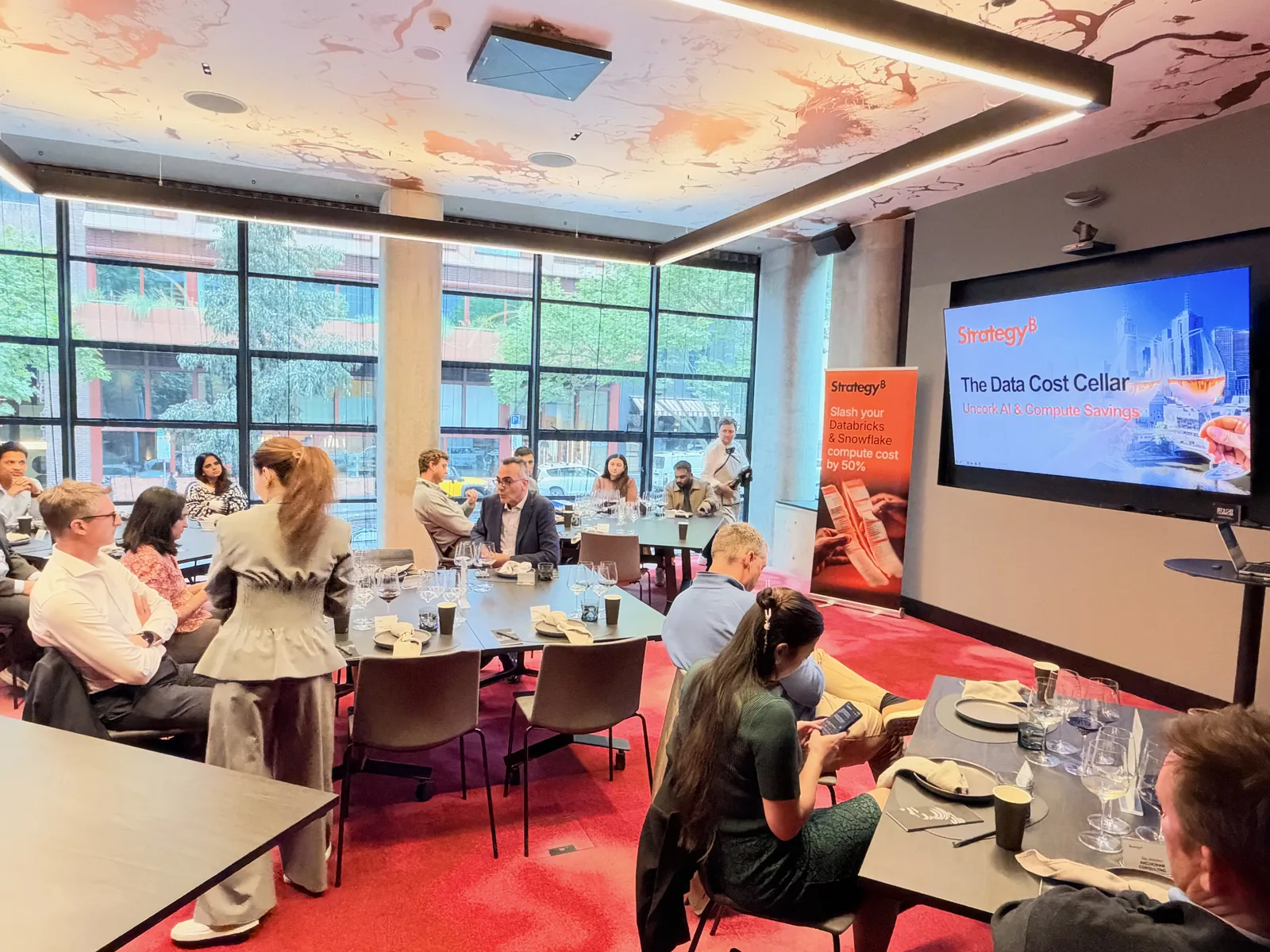
We took over a room at the QT in Melbourne on Wednesday for an afternoon on AI consumption and the universal semantic layer. The session was called The Data Cost Cellar, which tells you where the wine came in.
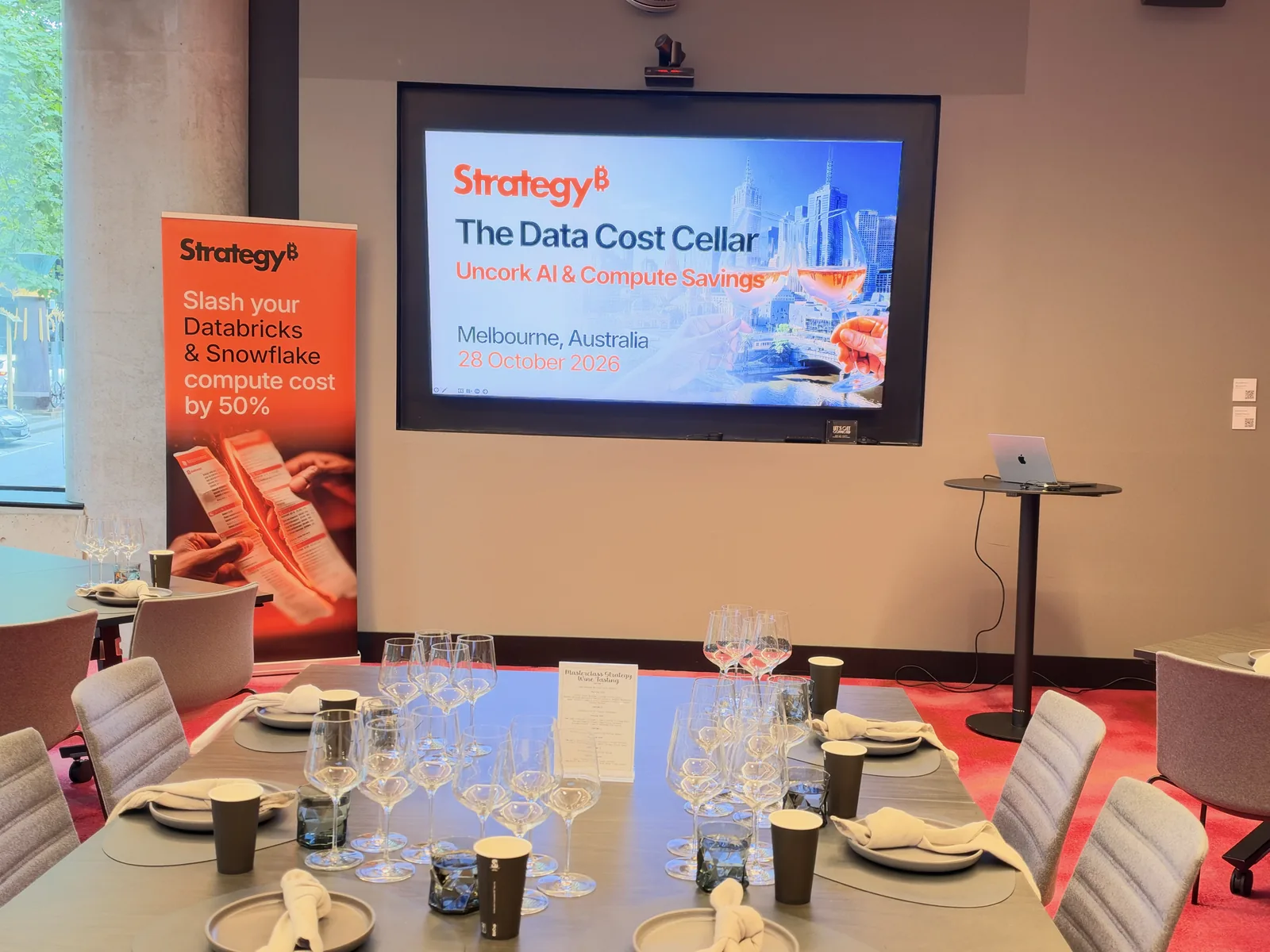
The banner beside the screen made a plain claim: cut the compute cost of the warehouse underneath by half. That claim is the whole argument, so it is worth saying what sits under it.
Strategy Mosaic can hold a copy of the data in memory. A query that starts life in a report, a dashboard or a model then runs against that copy instead of travelling back to the warehouse engine underneath. If the question genuinely needs the live data, it can still go to the engine. The point is that it becomes a choice you make per query rather than a cost you pay on every single one by default. Most of the questions a business asks in a week do not need the data as it stands this second. They need a definition everyone agrees on and an answer that comes back quickly.
Nobody in that room needed convincing that AI costs money. They are already paying for it and watching the line climb. What they wanted was to hear that part of it is avoidable. We are not a free platform and nobody in the session pretended otherwise. But consumption is the line that is running, and it is the one with room to move.
The second thing that landed was speed. Mosaic Studio lets a team use AI to build the semantic model and the metrics, rather than hand-writing every definition before anyone gets an answer. That matters more than it sounds, because the slow part of a semantic layer has never been the idea. It is the months of work to make the idea real. If that collapses to weeks, the budget conversation changes shape, and it becomes something you can show a result for before the next review.
The room was banks, consultancies and retailers, which is a useful mix, because they all arrive at the same place from different directions. The questions over lunch were less about whether to use AI and more about how to justify the spend without letting it run overboard. That is the question the semantic layer actually answers, and it is an easier answer to take to a finance team than a story about productivity.

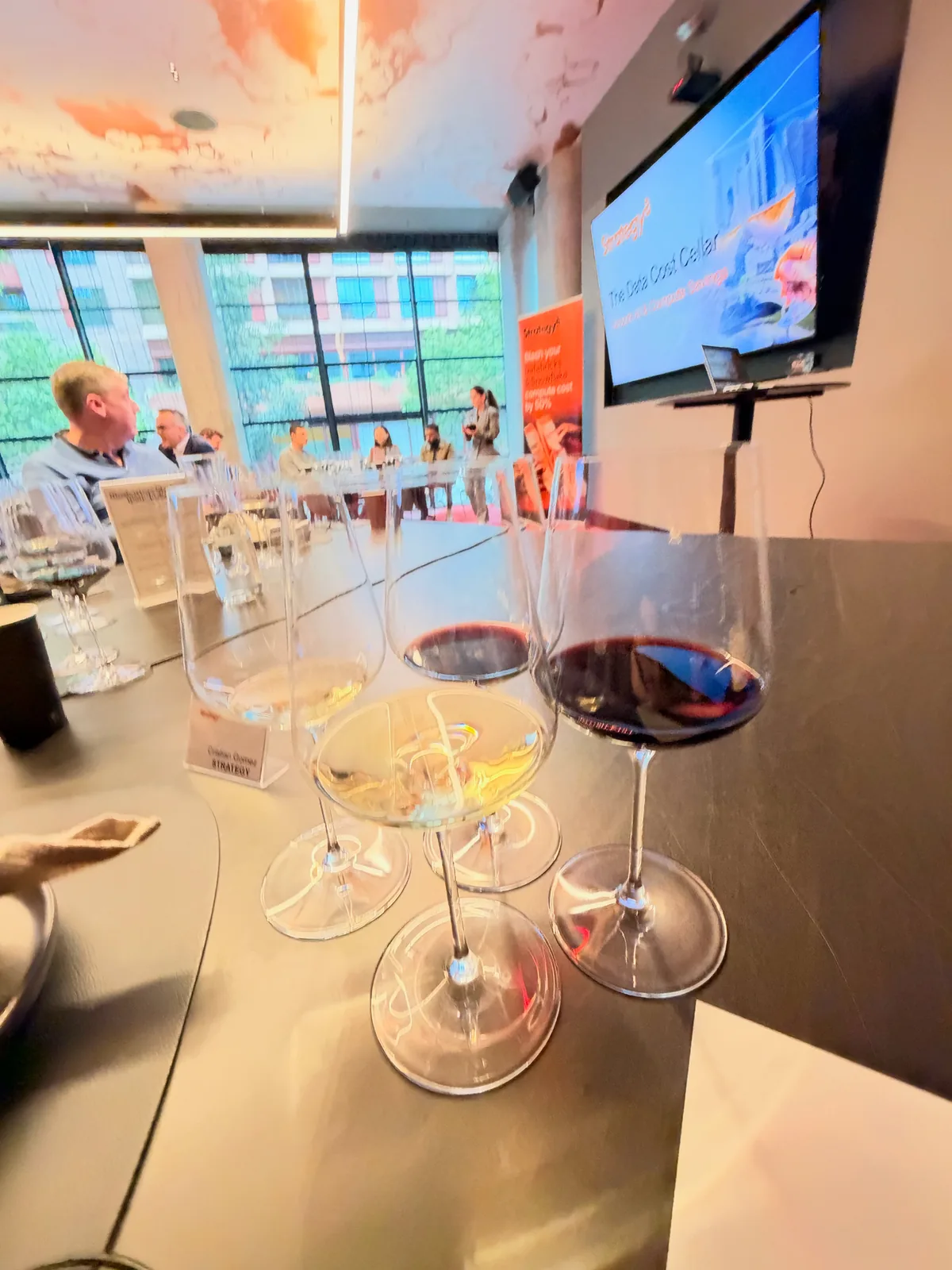
Then the wine, which the name promised. Someone walked us through a set of them, some French and some Australian, paired with seafood first and then meats, with a vegetarian pairing alongside. The tables were set with name cards, and the conversation carried on well past the last slide, which is usually where the useful bits live.
What I came away with was how much people valued the candour. Nobody came for a pitch. They came to hear what the cost really is, what can be done about it, and where the limits are. I made a few new connections on LinkedIn and left with a longer list of questions than I arrived with.
What I’d tell another practitioner
At your next spend review, ask two questions. What is the model being asked to work out from scratch every time? And what could be answered from something already computed, defined once and trusted? The savings are usually in the definitions and in what you cache, not in a cleverer prompt.
~ Mr. Gómez