Who gets to build? Citizen AI tools, shadow IT and three guardrails
Goldman Sachs reportedly pulled AI coding tools back to engineers. Where citizen-built tools help, where they become shadow IT, and three guardrails.
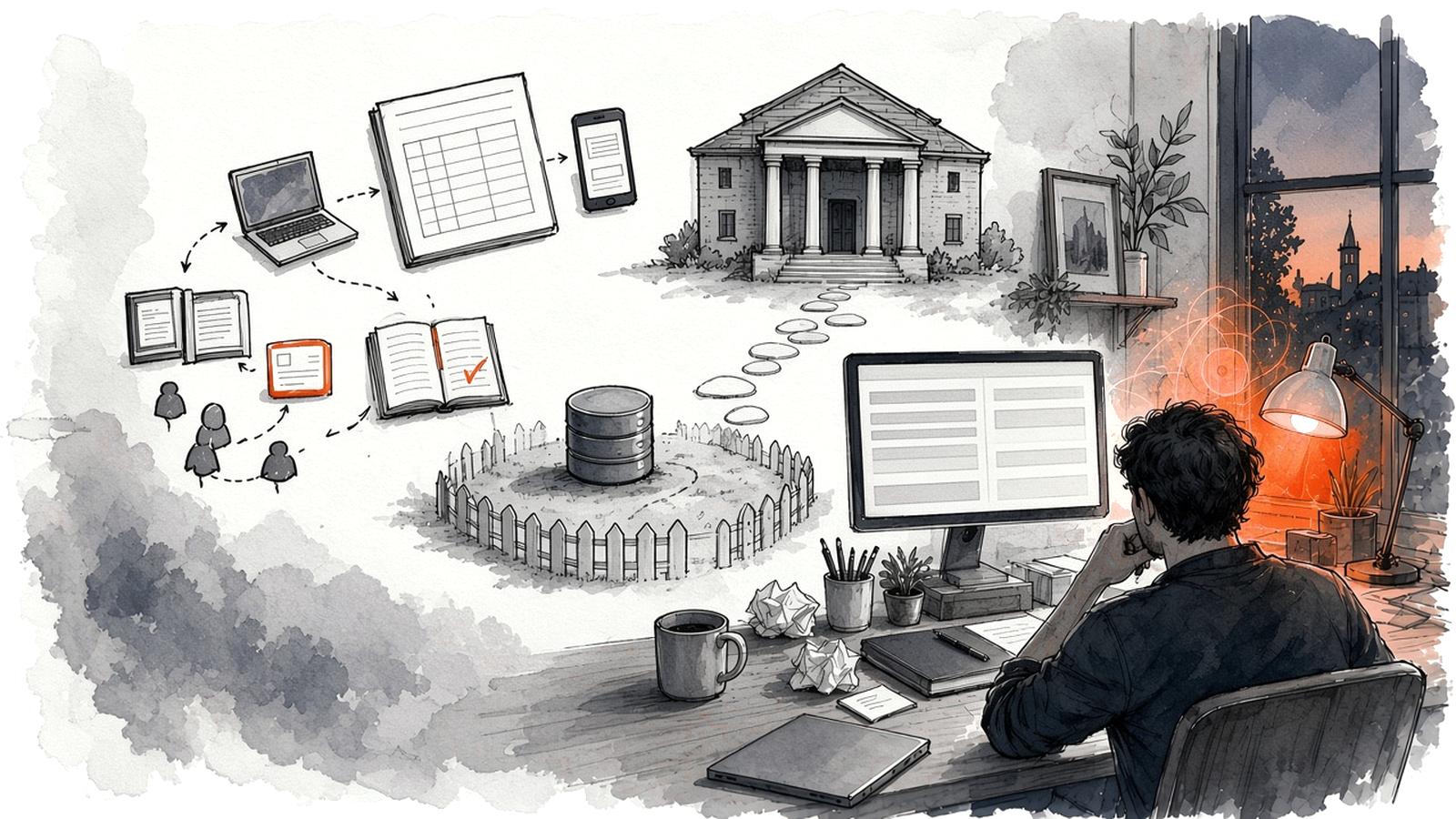
Goldman Sachs has taken advanced AI coding tools back off most of its traders and bankers, according to Bloomberg. Engineers, and a small group whose jobs mix engineering and trading, keep them.
My first reaction was a wince. My second was: I get it.
I’ve been on the other side of this. I don’t write software for a living, and I built a tool I needed because I got tired of waiting. So I’m not writing as the person who wants to take the keyboard away.
But I’ve also spent most of my career in enterprise data. I know what happens when a useful tool, owned by one person, quietly becomes something a whole team depends on.
What was reported
According to Bloomberg on 2 November, internal guidance updated in October limits advanced AI coding tools to engineers. Bankers had been allowed to use them for months. Staff whose jobs combine engineering, quantitative research and trading keep access.
Traders had used the tools to monitor client trading flows, model market changes and positions, and create written and graphic content. Some were frustrated by the change.
A spokesperson framed it as the end of an experiment: “After a period of experimentation where we assess a variety of factors including productivity and risk management, we put them in the hands of those who are best suited to leverage them for the long term.”
In July, Goldman’s CIO had spoken warmly about non-technical staff building their own solutions and handing them to engineers for polishing.
Two days after the Bloomberg story, eFinancialCareers quoted a senior developer at the bank. He described “massive pushback” and said hundreds of tools had been built by individuals, many of them improving personal productivity. The problems he pointed to were proliferation, data sensitivity, and tools owned by one person being passed around a team.
That last part is the whole story, for me.
Where citizen building genuinely helps
Let’s be fair to the traders first.
The people closest to the work know which ten minutes of their day are wasted. A trader who builds a view of client flows isn’t playing. They’re fixing a gap that would never have reached the top of an engineering backlog.
Citizen-built tools are at their best when they are:
- Personal. One user, one job, nobody else depending on it.
- Read-only. They look at data. They don’t change records, send anything or trigger an action.
- Disposable. If it breaks tomorrow, the person goes back to the spreadsheet, not to an incident.
- A spec in disguise. A working prototype is the clearest requirements document an engineer will ever get.
That last one matters. The July model, build it and then hand it to an engineer to harden, was right in principle. A business person who can show a working version saves weeks of workshops.
Where it becomes shadow IT
So where does it go wrong?
Not when someone builds something. It goes wrong when someone else starts relying on it.
Shadow IT isn’t a tool. It’s a dependency nobody registered.
Here’s a hypothetical, built from a pattern rather than any real firm or client. A trader builds a small app that pulls positions and client data into a morning summary. It’s good. Three colleagues ask for a copy. One of them adds a feature that writes notes back to a shared file. The trader moves desks. Six months later, a morning meeting runs off a tool with no owner, no tests, credentials that belong to someone who has left the team, and client data sitting somewhere nobody approved.
None of those steps felt like a decision. That’s the problem.
A developer at another bank put the engineering side bluntly to eFinancialCareers. Non-technical builders, he said, “leave out the boring stuff like authentication, entitlements, end to end testing, build and deployment.”
He’s right. And the boring stuff is exactly what a regulator, an auditor or a client will ask about.
There’s a capacity problem too. If every working prototype becomes an engineering ticket, you haven’t removed the backlog. You’ve moved it and made it bigger. Hundreds of tools waiting to be hardened is a queue, not a strategy.
Three guardrails I’d put in place before saying no
Pulling access is a legitimate call, and some firms will need to make it. But it’s the bluntest instrument available, and it throws away the ideas along with the risk.
Before I said no, I’d want these three in place.
1. Register it and give it an owner
If a tool is used by more than one person, or runs on a schedule, it gets registered. Not approved. Registered.
A five-minute form: what it does, who owns it, who uses it, what data it touches and what it can change. Each tool gets a named owner and a named backup. When the owner changes role, the tool comes up for review automatically, the same way their access does.
Make registration the price of the good stuff. Registered tools get a sanctioned place to run and help when they break. Unregistered tools get neither.
2. Draw the data boundary in the platform, not the policy
A policy document doesn’t stop a tool reading the wrong table. A platform does.
Give citizen builders a sandbox with clear lines:
- Read-only access to a curated, governed set of data by default, with masked or synthetic data where it’s sensitive.
- No client or personal data outside approved stores, and none pasted into unsanctioned AI tools.
- Tools run under the builder’s own entitlements, never under shared or service credentials.
- Anything that writes, sends, trades or approves is out of scope until it graduates.
If governed data is easy to reach, people stop copying extracts to their laptops. In my experience, shadow IT usually starts with a CSV, not a model.
3. Build a graduation path into supported engineering
Every useful citizen tool should have three possible endings: stay personal, graduate or retire.
Write the graduation triggers down. More than a handful of users. Used in a client-facing or regulatory process. Writes to a system of record. Touches sensitive data. Once a tool hits a trigger, it moves to a supported team that does authentication, entitlements, tests, deployment and monitoring properly. Or it’s retired, with a date.
The builder stays on as product owner. That’s the reward: their idea becomes real, and they don’t carry it alone at 2 am.
Then fund the hardening. A small group of FDEs who sit with the business and turn prototypes into supported tools gives the queue a home and a budget.
So who gets to build?
Everyone, I’d argue. The harder question is who gets to depend on what someone else built.
A broad restriction answers a governance question with an access decision. In a regulated bank that’s understandable, and there may be reasons that weren’t reported. But it also tells the people closest to the problems that their ideas only count if they become engineers.
Who decides, and who’s accountable when it goes wrong, is the question at the centre of my research on decision rights. Citizen building is that question at the scale of one desk.
What I’d tell another practitioner
Start with the inventory, not the tools. You can’t govern what nobody registered, and most organisations don’t know how many of these tools they already have.
Make the safe path the easy path. A governed sandbox with real data beats a policy that pushes people back to their own laptops.
Agree the graduation triggers before you need them. Then the conversation about a popular tool is a checklist, not an argument.
And if you do pull access, say what comes next. Taking the tools away is one decision. Leaving people nowhere to take their ideas is another.
~ Mr. Gómez
Sources. Bloomberg News, “Goldman Restricts Traders and Bankers From Using Some AI Tools”, Todd Gillespie, 2 November 2026. eFinancialCareers, “As Goldman Sachs restricts vibe coding, developers express how annoying it is”, Sarah Butcher, 4 November 2026. Also reported by Quartz and Fast Company.